


.png)


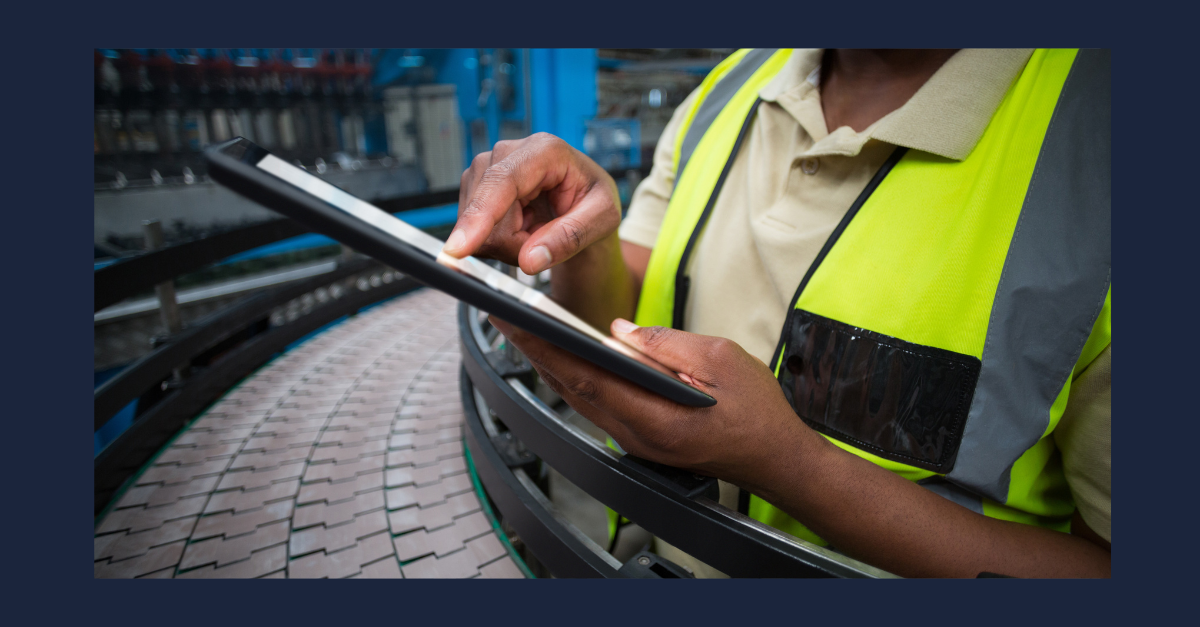
Most Manufacturing Execution Systems (MES) were built to rigidly enforce processes, not to empower people or evolve how work gets done.
MES platforms excel at orchestrating step-by-step instructions for machine-based tasks. But they fall short in capturing expert knowledge, adapting to real-world variability, or enabling frontline improvement.
Dozuki offers a modern, knowledge-first alternative: one that unites work instructions, training, operational guidance, and process control. Designed for the humans running the line, not just the systems tracking it.
MES Systems Control Processes, But Don’t Capture Knowledge
MES platforms operate as rigid frameworks, great for orchestrating process flow, weak for enabling human knowledge. Instructions are often coded by engineers, disconnected from tribal knowledge or real frontline insights.
Dozuki enables frontline teams to create, update, and improve SOPs in real time, capturing best practices from the floor and pushing improvements without custom code.
Implication: When something breaks, varies, or improves, an MES can’t adapt quickly. Dozuki can, because it puts knowledge where the work happens.
Version Control Gaps
MES platforms manage steps, not documents. Many MES setups lack true document control for SOPs, work instructions, or revision-tracked knowledge.
That’s a risk for audits and quality systems like ISO 9001. It also creates downstream problems in training, safety, and consistency.
Dozuki ties every instruction to its controlled version, tracks approvals, and integrates seamlessly with training sign-offs and change logs.
MES ≠ Worker Proficiency
MES confirms whether a task was followed, not whether the person was trained, skilled, or ready.
It doesn’t evaluate who should run a task, just that the task was done.
Dozuki ties skill matrices, qualifications, and observed sign-offs directly to SOPs, so only qualified workers are scheduled, and compliance isn’t just logged, it’s proven.
Built for Engineers, Not Operators
MES was built by and for process engineers, requiring technical configuration, deep integrations, and expensive maintenance.
Updates are hard-coded. Interfaces are rarely mobile. Operator feedback is almost never captured.
Dozuki puts process knowledge into the hands of operators: mobile, stepwise, gloved-hand friendly, and fully integrated into real-time work.
What MES Data Misses
MES tracks cycle times, machine states, and production flow. But it doesn’t capture the why behind a deviation, or the how behind human-led adjustments.
MES misses frontline feedback, manual checks, missed steps, workarounds, and opportunities for improvement.
Dozuki closes this gap by capturing real-time observations, operator comments, in-process checks, and continuous improvement signals.
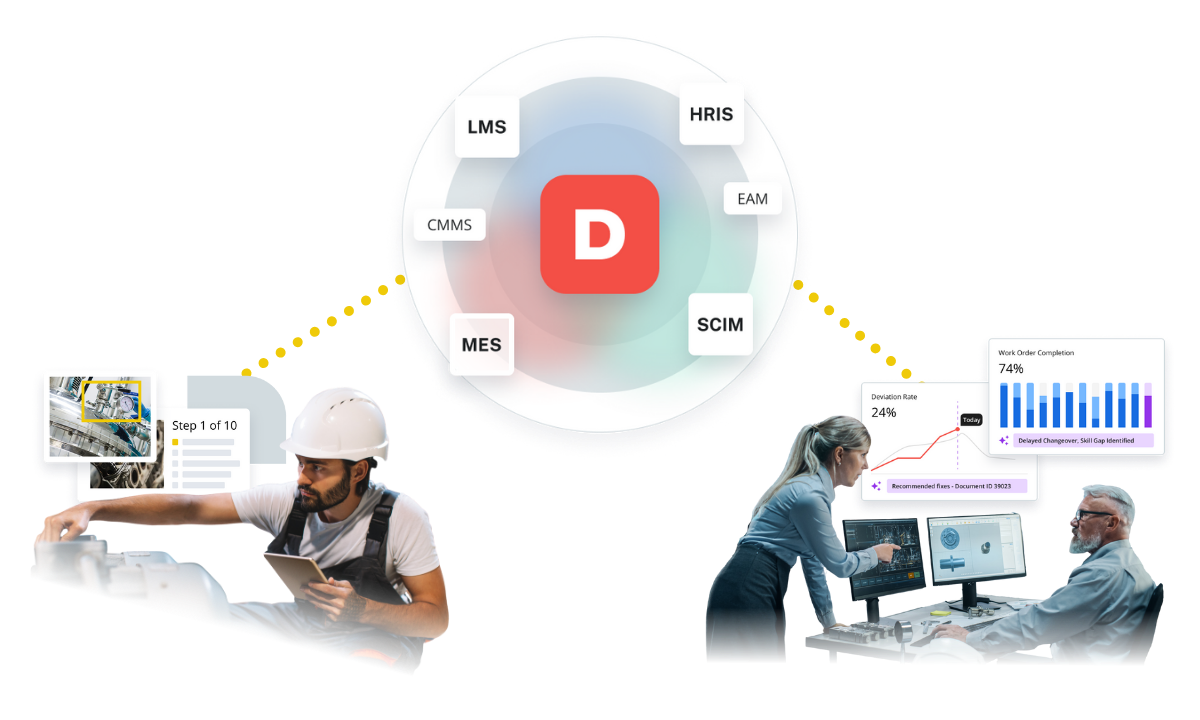
Connected Worker Platforms: Complementing MES Layers
Analysts describe Connected Worker Platforms as the "human layer" of digital transformation. Where MES orchestrates machines, Connected Worker Platforms orchestrate people, knowledge, and execution quality.
With Dozuki, you get:
-
Digital SOPs with media, logic, and conditional paths
-
Integrated document control and audit trails
-
Real-time guidance with mobile access
-
Skill tracking and qualification-based work assignment
-
Feedback loops for continuous improvement
-
Seamless integration with MES, HRIS, CMMS
MES runs the machine. Dozuki empowers humans.
Side-by-Side Comparison: MES vs. Dozuki
|
Capability |
Traditional MES |
Dozuki Connected Worker Platform |
|
Primary purpose |
Process execution, machine orchestration |
Guide human work, capture knowledge, verify proficiency |
|
Content creation |
Hardcoded by engineers |
Author, update, and control SOPs in-platform |
|
Version control |
Limited or external |
Built-in with audit trails and approvals |
|
Competency tracking |
Not native |
Skill matrices, on-the-job signoffs |
|
Training integration |
Often separate system |
Built-in learning tied to real work |
|
Operational feedback |
Not captured |
Real-time feedback, checks, and deviations |
|
User experience |
Desktop, fixed terminals |
Mobile, offline-friendly, worker-first |
|
Adaptability |
Rigid and slow to update |
Agile, continuous, bottom-up improvement |
|
Integrations |
Machine networks |
HRIS, LMS, CMMS—plus xAPI and SSO |
|
Cost & complexity |
High implementation & upkeep |
Fast time-to-value, lower TCO |
AI-Powered Insights: Moving from Reactive to Predictive Operations
While the MES tracks the machine's pulse, a Connected Worker platform uses AI to track the human pulse of the operation. For a VP of Manufacturing, this unlocks three transformative capabilities:
-
Predicting Skill Gaps Before They Cause Downtime
AI analyzes execution data across your workforce to identify who is struggling with specific complex tasks. Instead of waiting for a quality failure, the system flags that "Shift B is 20% slower on changeovers for Line 4" and automatically pushes a micro-training module to those operators' tablets. -
Eliminating Process Bottlenecks via "Human Analytics"
By overlaying human execution time with machine cycle data, AI identifies "Human Bottlenecks." It can distinguish between a machine that needs maintenance and a process that is simply too complex for a single operator to handle safely, suggesting a workflow redesign. -
AI-Native Content Generation
Dozuki Industrial AI can take a raw video of a senior technician performing a complex repair and automatically transcribe it into a step-by-step, multilingual SOP. This removes the "documentation burden" from your engineers and ensures your digital library grows as fast as your factory evolves.
A Practical Path: 90 Days to the Frontline Execution Layer
-
Map Your Core Processes
-
Identify high-variance or high-risk SOPs currently run through MES
-
-
Digitize the Top 10
-
Build Dozuki SOPs with rich media, approvals, and feedback loops
-
-
Capture Worker Skill & Proficiency
-
Assign training from SOPs, launch signoffs, and validate readiness
-
-
Collect Feedback & Deviations
-
Use in-line observations to gather improvement data
-
-
Integrate with Existing Systems
-
SSO, HRIS, and CMMS for unified operator scheduling
-
-
Quantify the Impact
-
Show improvement in uptime, errors, and training velocity
-
Evaluation Checklist for Executives
-
Are we authoring and updating SOPs directly in the flow of work?
-
Can we verify who is qualified, not just who completed the task?
-
Do we enable worker feedback and kaizen loops?
-
Is our frontline guidance mobile, accessible, and easy to update?
-
Can we remove complexity and cost from our MES stack?
-
Are our operators empowered, or just following steps?
Operational excellence doesn’t stop at controlling machines, it requires empowering the people who run them. If your MES manages flow but not frontline capability, it may be time to rethink what truly drives execution.

Written by Scott Ginsberg
Scott is the Content Marketing Manager at Dozuki. He’s spent 20+ years writing books about wearing nametags, conducting corporate training seminars on approachability, and leading knowledge management programs at tech startups. Text him right now at 314.374.3397 with your favorite emoji.