


.png)


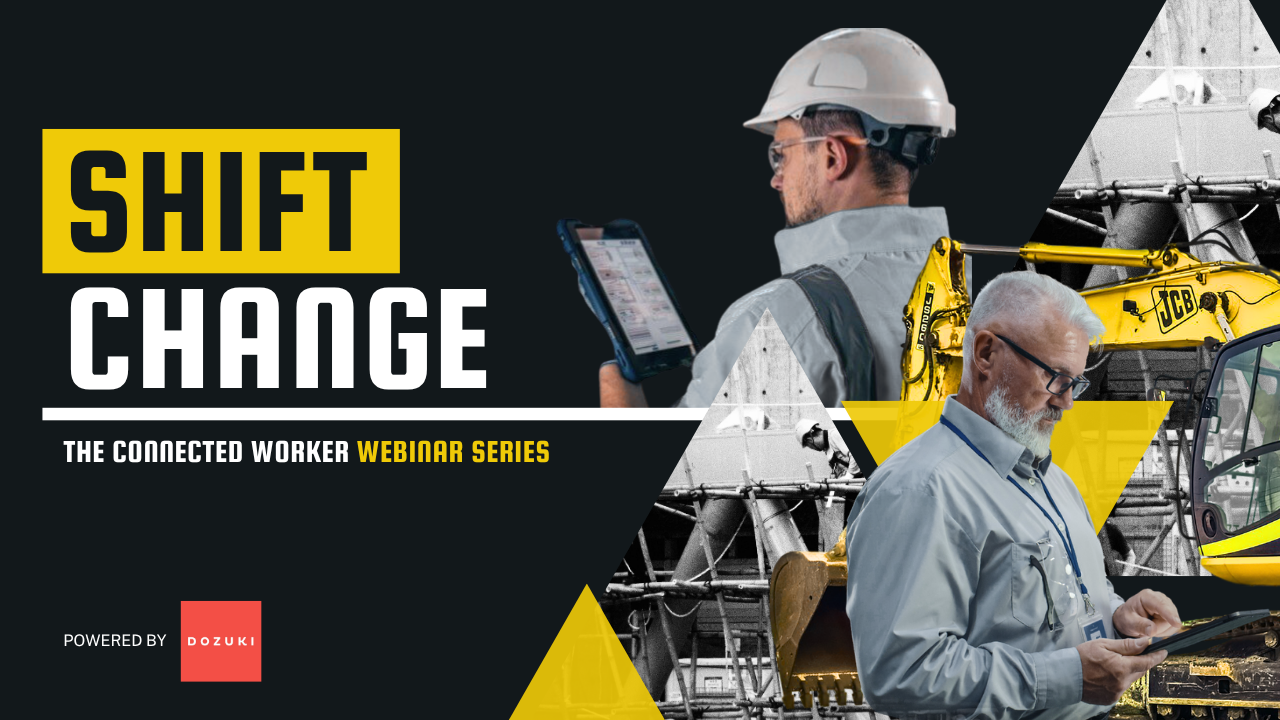
Artificial intelligence continues to dominate conversations across manufacturing. Every week seems to bring another prediction about automation, workforce disruption, or revolutionary new capabilities. The reality on the factory floor is much more practical.
In our latest Shift Change webinar, Dozuki CEO Jerry Dolinsky and VP of Product Allen Yeung cut through the hype to discuss what they're actually seeing from hundreds of manufacturers around the world. Drawing from customer conversations, plant visits, and real implementation stories, they shared practical advice for manufacturers looking to leverage AI without losing sight of what matters most: their people.
Here are the biggest takeaways from the discussion.
1. AI Will Change Manufacturing Jobs, Not Replace Them
One of the biggest myths surrounding industrial AI is that it's coming to replace frontline workers. Jerry and Allen offered a much more realistic perspective.
For many manufacturers, especially those producing complex products, the greater challenge isn't eliminating jobs. It's filling them. Labor shortages, retiring experts, and increasing operational complexity continue to create significant workforce gaps. AI's role is to help workers become more productive, more knowledgeable, and better equipped to perform increasingly skilled work.
2. Your Biggest AI Challenge Isn't AI. It's Your Knowledge
Manufacturers are eager to adopt AI, but many overlook the foundation it requires.
AI is only as valuable as the information it can access. Across hundreds of customer conversations, one challenge consistently emerges: critical operational knowledge often lives inside experienced employees' heads, outdated documents, spreadsheets, or disconnected files.
Before organizations can fully benefit from Industrial AI, they need accessible, structured, and current operational knowledge. Capturing tribal knowledge and converting it into standardized digital work instructions creates the foundation that allows AI to deliver meaningful value.
3. Start Small by Solving Your Biggest Operational Problem
One of the strongest recommendations from the discussion was simple: don't try to digitize everything at once.
Instead, identify the areas creating the greatest operational pain.
That might include:
- Safety incidents or near misses
- Quality issues or recalls
- High scrap rates
- Low throughput
- Critical skill gaps
By prioritizing high impact processes first, manufacturers can demonstrate measurable improvements while building momentum for broader digital transformation initiatives.

4. AI Makes Capturing Tribal Knowledge Faster Than Ever
Historically, documenting expert knowledge has been slow, manual work that competed with everyone's daily responsibilities.
Today's AI tools dramatically reduce that effort.
Jerry shared examples of manufacturers recording experienced operators with nothing more than a smartphone. AI can transform those walkthroughs into structured work instructions within minutes, leaving experts to review and refine instead of creating documentation from scratch.
Allen described a customer whose operator explained an entire process in his native Spanish, revealing valuable operational details that had never been documented, including seasonal adjustments that prevented production issues.
Instead of replacing expertise, AI is becoming one of the fastest ways to preserve it.
5. Trust Is the Real Accelerator for AI Adoption
Technology alone doesn't determine success. People do.
One particularly compelling story centered on a large union manufacturing facility. Leadership initially expected employees to resist AI because they feared it would monitor or replace them.
The opposite happened.
By inviting experienced workers into the documentation process and positioning AI as a way to preserve decades of hard earned expertise, employees became active contributors. Rather than viewing AI as surveillance, they saw it as a tool that protected their legacy and helped future generations succeed.
Building trust proved just as important as deploying technology.
Bonus Story: When AI Found What Everyone Had Missed
One customer used AI to compare an experienced operator's actual workflow against the company's documented standard operating procedure.
The comparison uncovered several undocumented process improvements that had never been formally captured, including equipment settings that significantly improved production performance.
Once those best practices were documented and shared across shifts, productivity immediately improved.
It's a powerful reminder that AI doesn't just help document knowledge. It can uncover operational improvements hiding in plain sight.
Watch the Full Episode
Industrial AI is moving beyond experimentation and into practical application. The manufacturers seeing the greatest success aren't chasing headlines. They're building stronger operational foundations, preserving frontline expertise, and giving workers better tools to succeed.
Watch the full episode of Shift Change: The Industrial AI Reality Check to hear the complete discussion, customer stories, and practical recommendations from Jerry Dolinsky and Allen Yeung.

Written by Scott Ginsberg
Scott is the Content Marketing Manager at Dozuki. He’s spent 20+ years writing books about wearing nametags, conducting corporate training seminars on approachability, and leading knowledge management programs at tech startups. Text him right now at 314.374.3397 with your favorite emoji.