


.png)


Capturing operational knowledge is only the beginning.
The real value comes when that knowledge can be transformed into clear standards, used to develop the workforce, applied during the work, and improved using real operational data.
This month’s Dozuki updates strengthen that full Connected Worker cycle. Industrial AI can now preserve critical motion from source videos inside generated Guides, while new dashboards help operations leaders uncover training bottlenecks and identify where processes are drifting out of specification.
Together, these capabilities help industrial teams move faster from frontline knowledge to measurable operational improvement.
Preserve the Movements That Words and Images Cannot Explain
Some parts of a process are easy to document with a photograph and a written instruction. Others depend on movement, timing, sound, pressure, or physical technique.
A worker may need to see how a component is rotated into position, how a latch should feel when it engages, or how quickly a tool should move through a particular step. Those details are often obvious to an experienced operator but difficult to communicate in a static procedure.
Industrial AI can now identify moments in a source video where motion adds important context and include short video clips within the generated Guide.
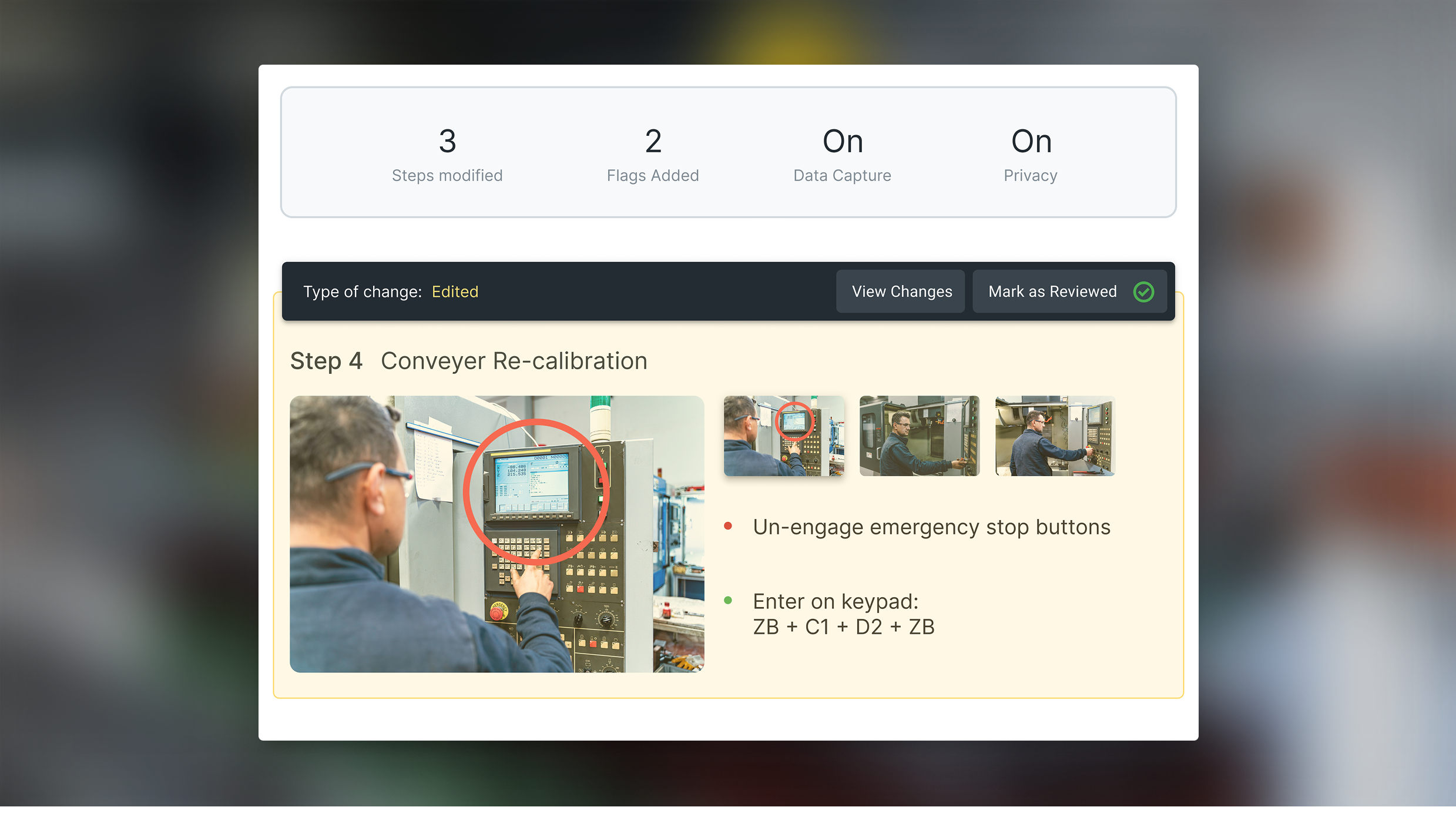
Instead of requiring an author to manually find, trim, and embed every useful segment, CreatorPro AI helps preserve those critical demonstrations as part of the initial conversion process. The resulting Guide combines structured, step-by-step instruction with motion where motion improves understanding.
This advances the Dozuki Knowledge Management capabilities in two important ways:
- Subject-matter experts can capture processes naturally by demonstrating and explaining the work.
- Authors can create clearer visual standards without turning every procedure into a manual video-editing project.
The objective is not simply to generate content faster. It is to help organizations convert frontline expertise into controlled, reusable standards without losing the physical details that make the work understandable.

See Where Processes Are Drifting
Once a standard is deployed, operations teams need to know whether the process is consistently producing the expected result.
The new Work Order Deviations Overview brings out-of-spec responses into a centralized dashboard. Supervisors and continuous improvement teams can see numeric responses that fall outside established ranges, nonconforming pass/fail responses, deviation rates over time, and the Guides or individual steps producing the most frequent exceptions.
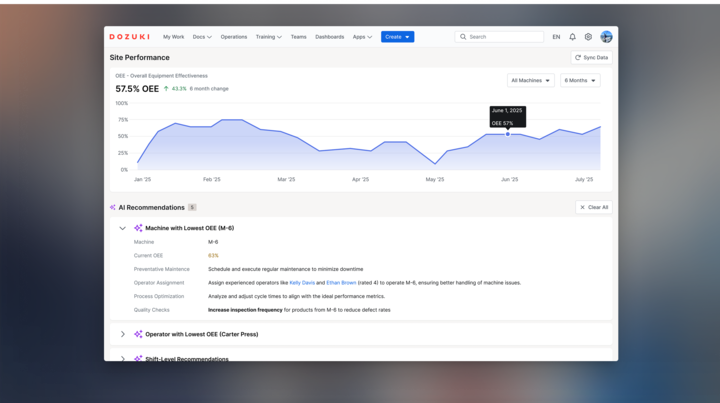
Previously, identifying these patterns could require reviewing individual work-order records or waiting for an operator to report an issue. The dashboard makes process drift easier to spot across completed work.
That visibility helps teams:
- Detect recurring problems before they become larger quality events.
- Identify which procedures or steps deserve closer investigation.
- Compare deviation patterns across teams, processes, and time periods.
- Evaluate whether a corrective change is actually reducing recurrence.
This is an important extension of Dozuki Operational Workflows. Data capture provides more than a record of what happened. It becomes an input for continuous improvement.
Find the Bottlenecks Slowing Workforce Readiness
Completion records tell leaders who finished a course. They do not always explain why training takes too long or where learners are getting stuck.
The Training Performance Dashboard provides a more complete view of the learning cycle, from assignment through completion. Teams can distinguish between time spent waiting to begin training and time spent actively completing it, then drill into specific courses and stages to locate bottlenecks.
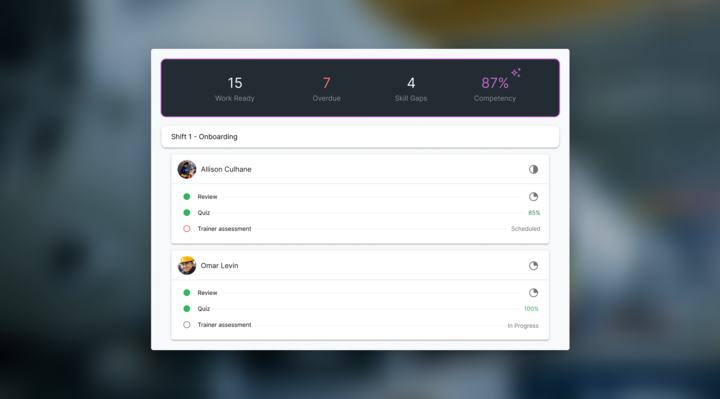
This gives training and operations leaders a better way to answer questions such as:
- Are learners beginning assigned training promptly?
- Which courses take the longest to complete?
- Are particular stages slowing down an otherwise effective program?
- Which programs have the strongest on-time completion rates?
- Where should we focus to reduce ramp time?
The dashboard supports Dozuki Learning Pathways by connecting training administration to workforce performance. Instead of treating completion as the final measure, teams can use cycle-time data to improve how employees are onboarded, upskilled, and prepared for the work.
A Connected System for Frontline Performance
These updates represent three connected parts of the Dozuki platform.
Knowledge Management captures expertise and turns it into clear, controlled standards.
Learning Pathways develops workforce readiness and provides visibility into the path from assignment to proficiency.
Operational Workflows guide execution and capture the data teams need to understand where processes are performing as expected and where they are not.
The result is a continuous operating cycle: capture knowledge, build capability, guide the work, identify opportunities, and improve the standard.
That is the Dozuki Edge.

Written by Lucas Bishop
With a passion for all things manufacturing, Lucas is a research fanatic that focuses on expanding the digital footprint of Dozuki and providing valuable industry insights.