


.png)


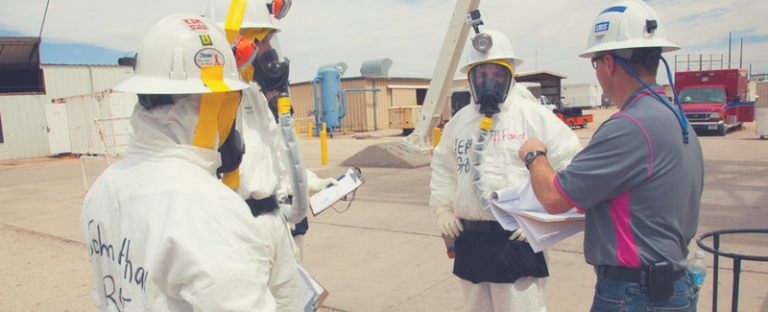
 We recently wrote a popular article about a major mistake at a nuclear waste facility. In short, we cited poor standard revision processes as the root cause of the mistake, costing the company $500 million to remediate.
However, as has been pointed out to us, we made a mistake.
Practice What You Preach
In the article, we cited the location of the nuclear waste facility as Carlsbad, California, when in fact it was Carlsbad, New Mexico.
Out of context this seems insignificant, but the feedback we received specifically highlighted the hypocrisy that the mistake revealed.
The irony of our mistake was that the article itself was about reducing human error when writing technical documents. In other words, we were lecturing people on how to reduce errors, but couldn’t seem to reduce errors of our own.
"It seems that the accident happened in Carlsbad, New Mexico, as stated in the article you referred to. You might want to fix it, since your article is precisely about revision process/control…"
- Cesar A.
"Good article. But there is a mistake with the location. WIPP is at Carlsbad Caverns, NM."
- Tom S.
There we were, standing in our glass house, throwing stones of standardization. Fortunately, our articles don’t take on the the same risk as technical documents at nuclear waste facilities. Worse case scenario, we receive criticism on LinkedIn for our hypocrisy, laugh it off, and update it. But after some reflection, we realized our error wasn’t just a typo, it was an inevitable part of the process.
Standard Work is a Contradiction
Our awareness of the certainty of mistakes led to a singular conclusion—not only are mistakes like this inevitable, they are necessary. It seemed to us that the very notion of Standard Work is somewhat of a contradiction.
In the spirit of standardization, let’s take a step back to define what we’re talking about. The American Society of Quality (ASQ) defines Standard Work as:
“An essential building block of a lean enterprise. It helps ensure that each step in the process is clearly defined so that work can be performed repeatedly in the same manner.”
This isn’t dissimilar to other definitions, but the overarching idea is that Standard Work serves as the foundation for process improvement. It’s the bedrock for Kaizen and reducing waste. Under this simple definition, standards are a starting point, not the final destination. The foundation, not the entire structure itself.
Standards are a starting point, not the final destination.
A Foundation of Cards
The problem with foundations is that we invest so much time building, optimizing, and perfecting them, that we become resistant to change. The entire process is a Catch 22. We should strive to create the best standards possible, but through this process we become reluctant to do the one thing that the standards were built for — change.
In fact, the very semantics may be the underlying problem. There really is nothing standard about Standard Work.
If we are continuously improving, our “standards” shouldn’t remain standard for long.
“Standard” seems to imply that processes remain static and unyielding. Yes, we are striving to reduce errors and increase consistency, but this is done dynamically.
Perhaps “Temporarily-Standard Work” would be a more apt term. If we are continuously improving, our “standards” shouldn’t remain standard for long.
Ebony and Irony
Yes, we made a mistake. But it wasn’t ironic that there was an error in an article about reducing errors. In fact, it was quite appropriate.
The nature of mistakes are never as black and white as wrong or right. What better way to illuminate that processes should always be improving than by demonstrating that ours continue to evolve as well.
Mistakes are a critical part of the Standard Work lifecycle, and should be embraced not chastised.

Written by Dozuki
Dozuki is the leading Connected Worker Platform for industrial operations. Since 2011, Dozuki has helped thousands of manufacturing sites standardize processes, upskill their workforce, and capture real-time data to drive continuous improvement. With a focus on ease of use and enterprise-grade security, Dozuki is the...