


.png)


Why the Connected Worker Is the Future of Manufacturing Success
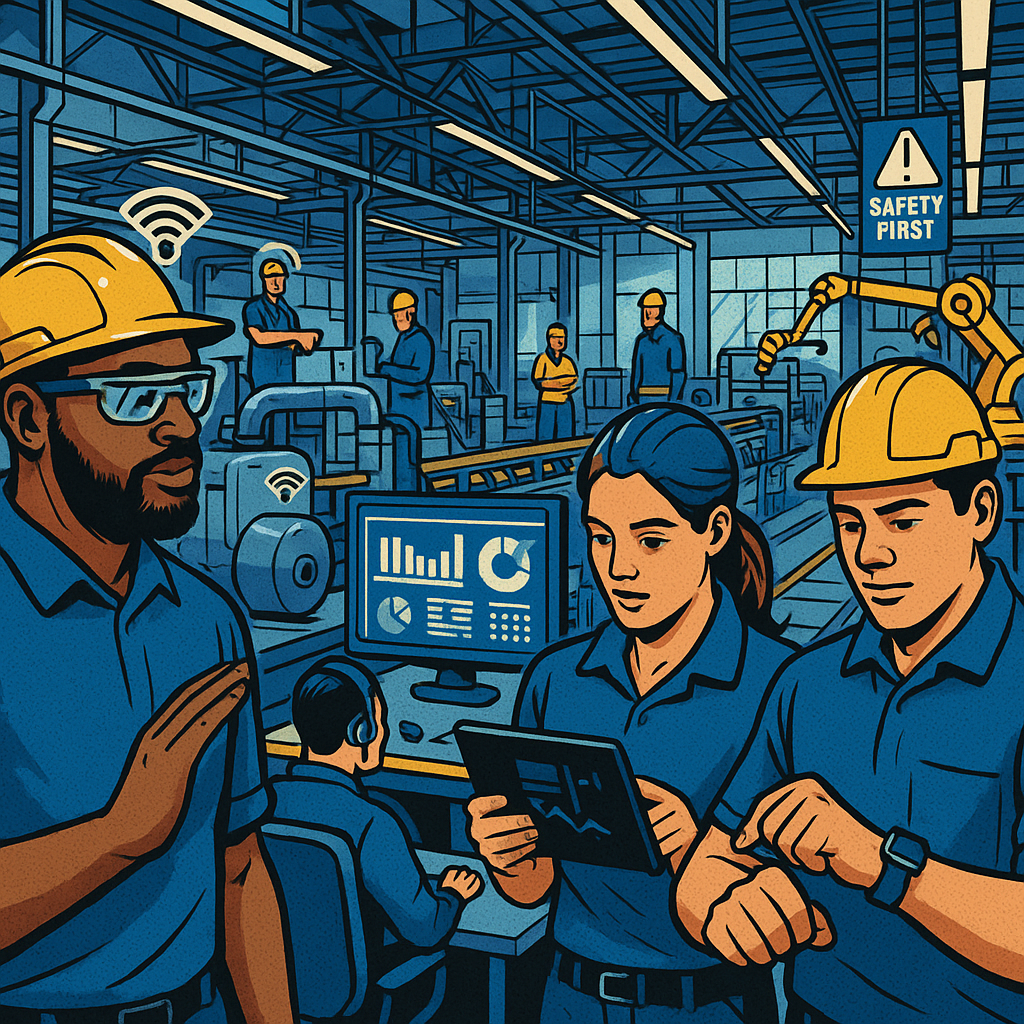
The manufacturing landscape is shifting at a rapid pace. As digital transformation accelerates, companies that fail to empower their frontline teams risk falling behind. The solution? Embrace the connected worker model, a strategy that integrates digital tools, real-time data, and team empowerment to improve productivity, safety, and operational excellence.
Updated on [4/1/26]
In this blog, we break down why connected workers are essential for modern industrial operations, how team leads play a pivotal role in this transformation, and the technologies driving the shift forward.
What Is a Connected Worker?
A connected worker is a frontline employee equipped with digital tools and real-time access to data that enhances their ability to perform tasks efficiently, safely, and collaboratively. This concept extends beyond providing tablets or wearables. It’s about creating a digitally integrated ecosystem where people, processes, and technology align.
Connected workers typically leverage:
- Mobile devices and wearables
- Augmented reality (AR) and virtual reality (VR) tools
- Cloud-based communication platforms
- Real-time analytics dashboards
This connectivity enables a constant feedback loop between operations, leadership, and frontline personnel.
Why Manufacturers Need Connected Workers Now
According to LNS Research, the most significant barrier to operational excellence isn’t a lack of technology, it’s the lack of empowered, connected frontline teams. Here’s why that matters:
1. The Productivity Gap Is Growing
Many companies still rely on outdated systems, like clipboards and spreadsheets, for frontline communication. These manual processes create data silos, reduce efficiency, and make it difficult to respond to issues in real time.
By contrast, connected workers can access insights instantly, flag problems faster, and collaborate seamlessly across shifts or locations.
2. Team Leads Are Overloaded and Undersupported
Team leads in industrial environments often serve as the bridge between executives and frontline staff. Yet, without digital support, they become bottlenecks rather than enablers.
Connected worker platforms allow team leads to:
- View live production metrics
- Assign and reallocate tasks based on real-time conditions
- Standardize best practices and workflows
- Monitor compliance and safety reports on the go
This not only lightens their load but ensures consistent decision-making across shifts.
3. Employee Engagement and Retention Are Tied to Enablement
Empowered workers feel more in control of their day-to-day responsibilities. Tools that reduce friction, eliminate redundant tasks, and provide clear direction lead to higher engagement and retention.
A Gallup study found that engaged employees are 21% more productive and 59% less likely to look for a new job. Empowerment through digital tools is a proven pathway to that engagement.
Benefits of a Connected Worker Strategy
Here’s a breakdown of the core benefits companies can expect when implementing a connected worker model:
| Benefit | Impact on Operations |
| Real-time problem detection | Reduced downtime and faster resolution |
| Standardized process documentation | High quality, consistency, and regulatory compliance |
| Enhanced communication | Improved shift handovers and cross-functional coordination |
| Workforce flexibility | Easier onboarding, training, and role adaptability |
| Data-driven decision making | More accurate performance analysis and continuous improvement efforts |
How to Successfully Implement a Connected Worker Strategy
To see real ROI, companies must go beyond just investing in tech. Success comes from aligning digital tools with cultural transformation. Here are five tips:
1. Start With the Team Lead
Empowering team leads should be your first move. They can act as multipliers, championing the use of digital tools and setting the standard for adoption.
2. Co-Design Workflows With Frontline Input
Use a bottom-up approach to ensure the tools serve real-world needs. Include operators in the design and feedback loop of digital workflow systems.
3. Train Continuously, Not Just Once
Ongoing coaching and microlearning embedded in daily workflows (instead of static, annual sessions) ensure long-term engagement and upskilling.
4. Track Metrics That Matter
Focus on leading indicators such as response time to issues, training completion rates, and adoption rates of digital tools, along with lagging indicators like production efficiency.
5. Celebrate Quick Wins
Document and share success stories early. Even small process improvements can build momentum and drive broader buy-in.
Connected Workers: A Competitive Necessity
As LNS Research points out, the transition to a connected workforce isn’t optional, it’s imperative for any company that wants to stay agile, efficient, and resilient in a rapidly evolving marketplace.
The real power lies in creating digital maturity on the frontline, not just the boardroom.
Organizations that prioritize connected worker strategies will not only outperform peers operationally but also foster a safer, more engaged, and more productive workforce.
The Strategic Necessity of a Connected Workforce
The shift toward a connected workforce is no longer a luxury for modern manufacturers, it is a competitive necessity. By implementing a connected worker platform, organizations can move beyond fragmented legacy systems and empower their frontline teams with real-time data and interactive guidance. This digital integration closes the gap between leadership’s goals and shop-floor execution, ensuring that productivity and safety are built into every movement. When workers are digitally supported, they become active decision-makers who can respond to operational challenges with speed, precision, and total confidence.
Long-term operational excellence depends on the ability to capture and scale expertise through robust digital knowledge management software. When standards are digitized and accessible at the point of use, they transform from static files into live tools for continuous improvement and workforce agility. A comprehensive connected worker platform unifies these standards with training and execution, creating a resilient ecosystem that is resistant to turnover and tribal knowledge loss. By prioritizing the digital enablement of the frontline, manufacturers don't just optimize today’s throughput, they build a future-proof foundation for sustainable growth.
Frequently Asked Questions
What does “connected worker” actually mean?
A connected worker is a frontline employee who uses digital tools to access real-time guidance, standardized training, and operational knowledge directly on the floor. Instead of relying on outdated manuals or shadowing, they follow step-by-step digital instructions, give feedback in the moment, and continuously improve how work gets done. This model ensures that every worker has the support they need, when and where they need it, to do their job safely, correctly, and efficiently.
Why are manufacturers investing in connected worker solutions now?
The stakes are higher than ever. As experienced workers retire and new hires arrive with different expectations, manufacturers are facing urgent skill gaps and quality challenges. Connected worker solutions give companies a scalable way to transfer knowledge, enforce standards, and speed up onboarding, without compromising safety or efficiency. It's not just about technology adoption; it's about building a workforce that can adapt and thrive through change.
Is a connected worker solution just another training system?
No. Training is only one part of what a connected worker solution delivers. A true platform connects training with execution, giving workers access to up-to-date standards while they work, not just in a classroom. It also builds in real-time collaboration, version control, compliance tracking, and performance analytics, turning your training program into an operational advantage.
How does a connected worker platform impact productivity?
It closes the gap between process design and frontline execution. When workers have instant access to visual instructions, role-based learning paths, and continuous support, they make fewer mistakes, work faster, and require less supervision. This not only accelerates onboarding and reduces rework, it also frees up your experienced employees to focus on higher-impact tasks instead of troubleshooting avoidable errors.
Is this type of platform scalable across multiple sites?
Yes. Leading manufacturers use connected worker platforms to unify processes across dozens, or even hundreds, of locations. With structured templates, approval workflows, and multilingual capabilities, companies can ensure that every site follows the same standards while still adapting to local needs. The result is faster scaling, more consistent execution, and better visibility into performance across the entire operation.

Written by Leslie Bloom
The #1 Connected Worker Platform
Trusted by thousands of industrial teams to standardize how work actually gets done. Dozuki turns frontline performance into compounding knowledge and measurable bottom-line impact.
Related Posts
Dozuki Unveils Forge AI: Built for the Next Generation of Industrial Operations
Embedded experiences and a dynamic AI Assistant help manufacturers scale expertise, strengthen workforce capability, and improve operational performance. Dozuki, the leading...
Continue Reading →Connected Worker Platform Use Cases in Manufacturing
Manufacturers are investing heavily in digital transformation, but technology alone does not improve frontline performance. According to Deloitte’s 2025 Manufacturing...
Continue Reading →Connected Worker Platform for Global Manufacturers
For large manufacturers, digital transformation gets harder with every plant added to the network. One facility may rely on experienced operators and paper instructions....
Continue Reading →