


.png)


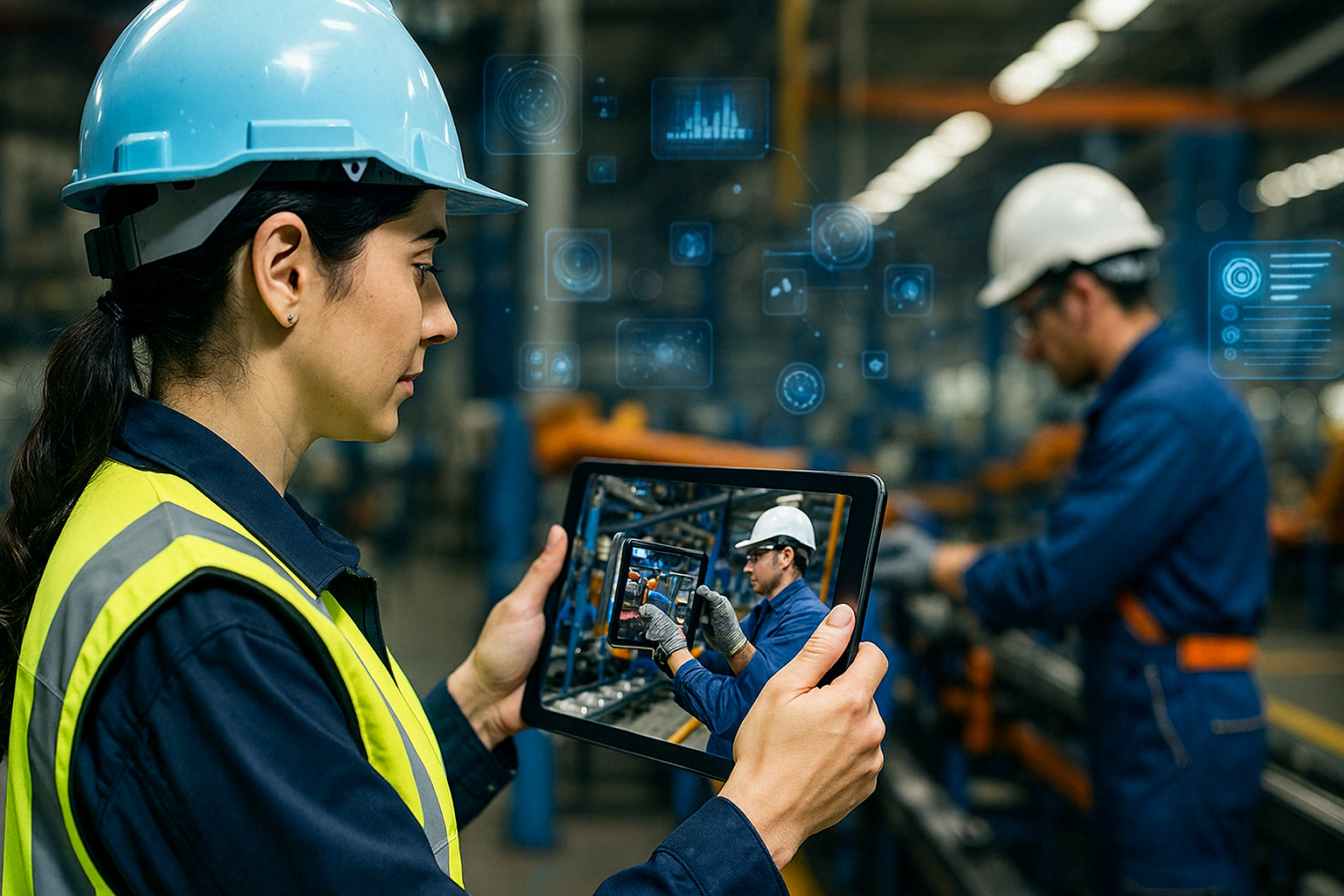
In 2026, manufacturers won’t be judged solely by what they produce, but by how fast they can adapt.
The year ahead brings a wide range of scenarios: cautious optimism around new trade agreements, meaningful tax incentives, persistent labor shortages, and the accelerating impact of AI-powered technologies.
Deloitte’s 2026 Manufacturing Industry Outlook points to a future that could swing in any direction, from ongoing stagnation to renewed growth.
The most resilient teams won’t wait to find out which path materializes. They’re already preparing. They’re building the systems and infrastructure that let them adapt on demand.
Agility Requires Infrastructure, Not Just Intention
In industrial circles, agility often gets reduced to a mindset, a cultural aspiration. But in the most prepared manufacturing organizations, agility isn’t aspirational. It’s operational. The leaders positioned to outperform in 2026 aren’t relying on gut instinct or heroic effort. They’re investing in infrastructure that allows them to absorb shocks, reorient fast, and align their workforce across every site, shift, and system, without delay.
That kind of executional agility requires more than awareness. It demands that institutional knowledge is captured and kept current. That workers can be onboarded, cross-trained, and upskilled at scale. And that every critical update, whether safety-related or process-specific, reaches the floor in hours, not weeks.
This is why connected worker platforms are no longer a future concept. They’re a present-day requirement. It’s also why Dozuki was recognized by Frost & Sullivan in their 2025 Radar for End-to-End Augmented Connected Worker Platforms. Not just for innovation, but for sharp execution and customer momentum.
As their analysts put it, “Dozuki’s continuous improvement loop provides one of the clearest paths toward operational excellence available in the market.”
The Hidden Agility Killers: Tribal Knowledge and Training Lag
Even the best-run teams can’t outpace disruption if their knowledge lives in binders, whiteboards, or retiree brain cells. Yet across the industry, many manufacturers still rely on outdated systems that weren’t built for speed or scale.
Standard operating procedures often lag weeks behind process changes. Onboarding still depends on shadowing or verbal instruction.

What Resilience Actually Looks Like in 2026
The most resilient operations don’t just weather disruption, they improve because of it. They adapt with precision and clarity. They turn problems into process changes, and frontline feedback into performance drivers.
Dozuki customers are already leading this shift. Structured digital SOPs, governed by version control, ensure that no team is working from outdated methods. Role-based learning pathways align training with real production roles, accelerating competency without interrupting operations.
AI-powered tools like CreatorPro AI transform expert input into usable instructions in minutes, not months. And built-in feedback loops let operators flag issues or suggest fixes directly within their workflow, closing the gap between the floor and leadership in real time.
The 2026 Outlook in Action
Deloitte’s 2026 manufacturing outlook highlights five priority areas for transformation. Each one reflects a real, urgent need that Dozuki’s platform is built to solve, not in theory, but in practice.
Continuous Improvement is a top priority for manufacturers seeking to unlock gains and navigate disruption through better insights and feedback. Dozuki operationalizes continuous improvement by creating a closed feedback loop between the frontline and leadership.
Workers can annotate instructions, surface errors, and submit improvements from the floor, while leaders track trends with real-time analytics. One global agricultural customer used Dozuki to reduce deviation incidents by 22% in six months by capturing and acting on worker-sourced improvements.
Health & Safety remains mission-critical as production environments grow more complex. Dozuki ensures every safety process is digitized, up-to-date, and enforced with mandatory checkpoints and digital sign-offs. A global medical device manufacturer adopted Dozuki to standardize safety procedures across three international sites, and achieved a 100% audit pass rate within the first year.
Learning & Development is under intense pressure, with AI adoption and reshoring creating new skill demands. Dozuki’s Learning Pathways make upskilling scalable by embedding role-specific training directly into the work.
A leading packaging company used the platform to cut onboarding time by 50%, saving over 5,000 labor hours annually, all while improving time-to-competency for new hires.
Productivity gains in 2026 will depend not just on automation, but on removing the friction that slows down execution. Dozuki delivers step-by-step instructions at the point of use, reducing hesitation, missteps, and manual oversight.
With CreatorPro, teams can author or update work instructions faster than ever. One automotive supplier improved cycle time by 23% and cut rework by 17% after standardizing instructions across multiple lines and shifts.
Quality continues to suffer under the weight of variation, across teams, products, and sites. Dozuki mitigates that risk through standardized procedures, full traceability, and structured documentation. A high-mix electronics manufacturer reduced process variability by 47% within one year of implementation, all while managing over 1,000 unique product builds. Imagine your production quality improving at that scale.
Bottom line: The needs Deloitte calls out for 2026 (agility, consistency, workforce readiness, and better execution at scale) are already being met by manufacturers using Dozuki.
How Leading Teams Are Preparing Now
Manufacturers preparing for 2026 aren’t waiting for perfect economic clarity. They’re building internal systems that give them confidence to move fast, no matter which direction the market turns.
They’re capturing critical know-how from retiring experts. They’re bringing documentation under version control. They’re using AI to close the gap between tribal knowledge and formal instruction. They’re embedding training into workflows, not just classrooms. And they’re benchmarking skills across roles and locations to ensure they’re never caught off guard.
Dozuki is proud to support industrial leaders building for this kind of resilience. Not with bolt-on tools, but with a unified platform that connects knowledge, training, execution, and feedback into one operational system.

Written by Scott Ginsberg
Scott is the Content Marketing Manager at Dozuki. He’s spent 20+ years writing books about wearing nametags, conducting corporate training seminars on approachability, and leading knowledge management programs at tech startups. Text him right now at 314.374.3397 with your favorite emoji.