To understand the connected worker, it is essential to look at how manufacturing has evolved. We are currently moving away from an era of pure automation and into an era of human-centric intelligence.
Introduced computers and basic robotics to the factory floor. While this improved speed, it often left the human worker isolated, following paper binders that couldn't keep up with the new technology.
Focused on smart factories and the Internet of Things (IoT). Machines began talking to machines, generating massive amounts of data. But many organizations realized that while their machines were connected, their workers remained disconnected, leading to a data-rich but insight-poor frontline.
This is the current shift. Industry 5.0 recognizes that the most flexible and essential element of a factory is the human worker. It prioritizes the collaboration between humans and smart systems. The connected worker platform is the primary infrastructure for Industry 5.0, ensuring that technology serves the worker, rather than the other way around.
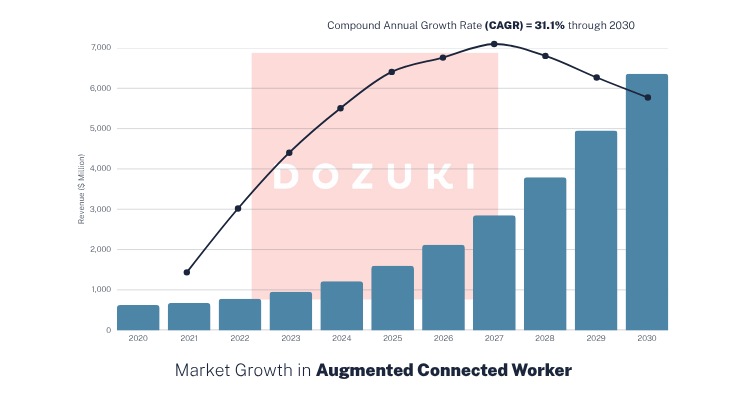
Analysts at Frost & Sullivan define this shift as the rise of the Augmented Connected Worker. This market is experiencing explosive growth (estimated 31.1% CAGR through 2030) as manufacturers move away from disconnected point solutions toward a single pane of glass to manage the shop floor.
Industrial leaders have always adapted to change. New equipment, evolving compliance requirements, and shifting competitive pressures are constants. What has fundamentally changed is the workforce itself. Manufacturing is no longer operating on stable assumptions about tenure, skill accumulation, or knowledge transfer. Experience cycles are shorter, skill decay is faster, and institutional knowledge is increasingly fragile. This creates not just a talent gap, but an execution gap.
97% of manufacturers report that Connected Worker initiatives have directly improved operational performance.
This is why the connected worker platform has emerged as a critical operational layer in modern manufacturing. According to LNS Research, 97% of manufacturers report that connected worker initiatives have directly improved operational performance. Their data highlights that these applications are no longer a nice-to-have, but a strategic cornerstone for building a competent, safe, and engaged workforce.
Also, according to Gartner, "Organizations that involve their frontline associates in shaping smart manufacturing are more likely to exceed expectations." This approach ensures that the workforce is engaged, skilled, and prepared for future challenges.
In today's volatile market, navigating intense labor shortages, rising operational costs, and rapid technological shifts has made the Connected Worker a strategic imperative for survival and success.
To remain competitive amidst compounding pressures, organizations must look beyond temporary fixes and adopt a comprehensive Connected Worker Platform to build a more resilient, high-performing workforce.
The traditional frontline management model was designed for stability. It assumed long tenure, informal apprenticeship, and gradual process evolution. That model no longer reflects reality. Many manufacturing environments now experience turnover rates exceeding forty percent annually, while average frontline tenure has dropped below three years in several sectors. At the same time, critical operational knowledge often remains undocumented, stored only in the experience of individual workers.
This creates structural risk. Paper binders, static PDFs, and disconnected work instruction systems cannot keep pace with dynamic operations. These tools do not adapt to change, enforce standardization, or scale across distributed teams.
When knowledge is not connected to execution, workers improvise instead of following standard work, supervisors rely on memory instead of systems, and audit readiness becomes reactive rather than systematic. Training becomes a one time event rather than an ongoing operational capability.
Modern manufacturers are addressing this by investing in systems that unify knowledge, training, and execution. This includes adopting platforms that enable standardized digital work instructions and centralized operational knowledge.
The competitive divide between leaders and laggards is widening. Leading manufacturers are building a digital execution layer that connects knowledge management, training, work execution, and continuous improvement into a unified system. Organizations that enable frontline workers with the right knowledge at the right time are significantly more likely to achieve performance goals. Faster onboarding reduces time to productivity, standardized execution improves first pass yield, and embedded feedback loops accelerate continuous improvement. The connected worker model is not a trend, it is a response to structural instability in the workforce.
While the goal of a connected worker platform is universal (standardized, expert execution) the way that value is realized depends on the specific friction points of your manufacturing environment.
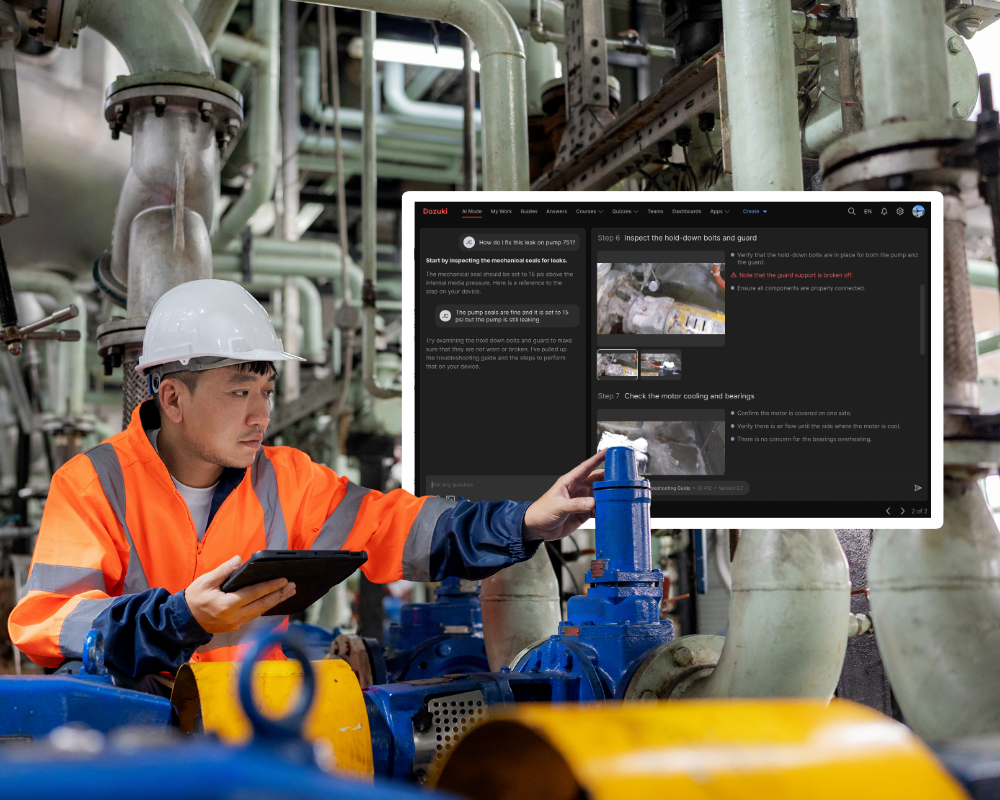
Dozuki is built to handle the unique operational requirements of both discrete and process manufacturing, ensuring that technology adapts to the workflow rather than forcing the workforce to adapt to the tool.
Driving Consistency in Fluid Environments In process manufacturing environments like Food & Beverage, Chemicals, and Pharmaceuticals, the "recipe" is the foundation of quality. Success is defined by the total elimination of batch-to-batch variability. When organizations rely on paper binders or memory for complex tasks like Clean-in-Place (CIP) or equipment changeovers, the risk of scrap and non-compliance skyrockets.
The Dozuki platform provides the precision required for these high-volume environments through digital center lining and automated governance. By providing operators with visual, step-by-step guidance, manufacturers ensure every machine setting matches the "golden run" standard.
This transition from tribal knowledge to a digital source of truth ensures 100% adherence to strict regulatory standards such as FDA, SQF, and ISO. The result is a significant reduction in wasted product and a streamlined audit process that moves from a reactive scramble to a state of constant readiness.
Managing Complexity in Assembly In discrete manufacturing sectors like Automotive, Aerospace, and Electronics, the primary challenge is managing complexity. High-mix production and frequent engineering changes create a heavy cognitive load for frontline workers. When workers are forced to navigate thousands of parts and shifting assembly requirements without real-time support, the result is often a spike in defects and a long, costly ramp-up time for new hires.
Dozuki solves this by creating a digital execution layer that simplifies complex assemblies through error-proofing and agile knowledge transfer. By embedding validation checkpoints directly into the workflow, such as required photo capture or data entry, the platform ensures zero-defect quality at the source.
Because Dozuki links directly to your engineering standards, updates like Engineering Change Notices (ECNs) are pushed to the floor instantly. This creates a flexible workforce capable of moving between different lines or cells with minimal retraining, effectively insulating the operation against labor shortages and skill gaps.
A connected worker is not defined by a device, but by access to knowledge in context.
Knowing what to look for in a connected worker platform can help steer your strategic decisions. Make sure the solution provides real time access to training, digital work instructions, and operational workflows at the point of work. It replaces fragmented systems with a unified execution layer that connects training, execution, and improvement into a continuous loop.
Traditional work instruction software focused on digitizing documents. Modern platforms operationalize those documents by transforming them into interactive, governed, and continuously updated systems. Instructions are no longer static files but dynamic assets that update instantly, trigger retraining when necessary, and integrate directly into execution workflows.
At its core, this category of technology functions as manufacturing knowledge management software that acts as a single source of truth for operational processes. This includes structured, visual, and standardized work instructions supported by version control, approval workflows, and audit trails. Modern systems increasingly use AI to accelerate this process, including tools that convert expert video and legacy files into structured procedures.
Training must be directly connected to execution. Learning pathways are built from real procedures, ensuring that workers are trained on exactly what they will perform. These pathways include embedded assessments, role based assignments, and automatic retraining triggered by process updates. Platforms designed for frontline training and workforce skills management ensure alignment between learning and real work.
Execution itself must be guided through operational workflows that embed instructions directly into tasks. Workers follow step by step digital processes that include validation checkpoints, embedded data collection, and required sign offs. These systems enable digitized operational workflows that connect execution to real time data and visibility.
Accessibility is critical. A connected worker platform must ensure that knowledge is instantly available at the point of work through mobile devices, QR codes, or workstation access. Multilingual support and offline capability are essential for global operations, while AI driven search enables workers to quickly find relevant information without navigating complex systems.
Continuous improvement must be embedded within the platform itself. Workers should be able to provide feedback directly within workflows, with that input routed through structured review and approval processes. Systems that support frontline collaboration and real time feedback capture ensure that knowledge evolves based on real execution.
These capabilities form what can be described as the inner loop of a connected workforce system, encompassing knowledge, training, execution, and feedback. This inner loop drives the outer loop of business outcomes, including safety, quality, productivity, and compliance. Without a functioning inner loop, operational performance degrades over time.
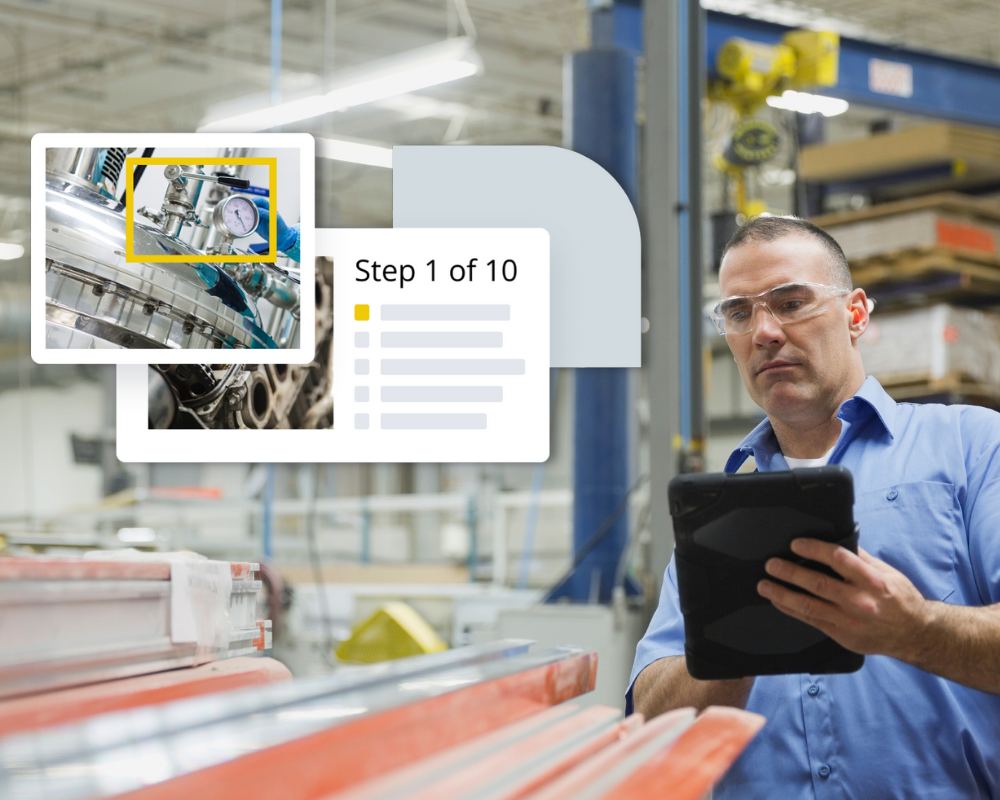
The importance of starting with a focused approach, addressing specific pain points and scaling up as success is realized. If your selected Connected Worker vendor doesn't lend a hand here, you have likely chosen the wrong solution.
A connected worker platform does not replace existing enterprise systems. It strengthens them by extending their value to the point of work, where execution actually happens.
Most manufacturing organizations already rely on a combination of MES, LMS, and QMS platforms to manage production, training, and quality. These systems are essential. They provide structure, governance, and enterprise level visibility. The challenge is not capability at the system level. The challenge is translating that capability into consistent frontline execution.
This is where a connected worker platform plays a critical role. As the makeup of the modern workforce becomes more complex, organizations are increasingly managing workforce ecosystems. Deloitte research indicates that 86% of executives believe the effective orchestration of both internal and external contributors is critical to performance. A connected worker platform provides the integration architecture necessary to coordinate these diverse contributors toward a single operational goal.
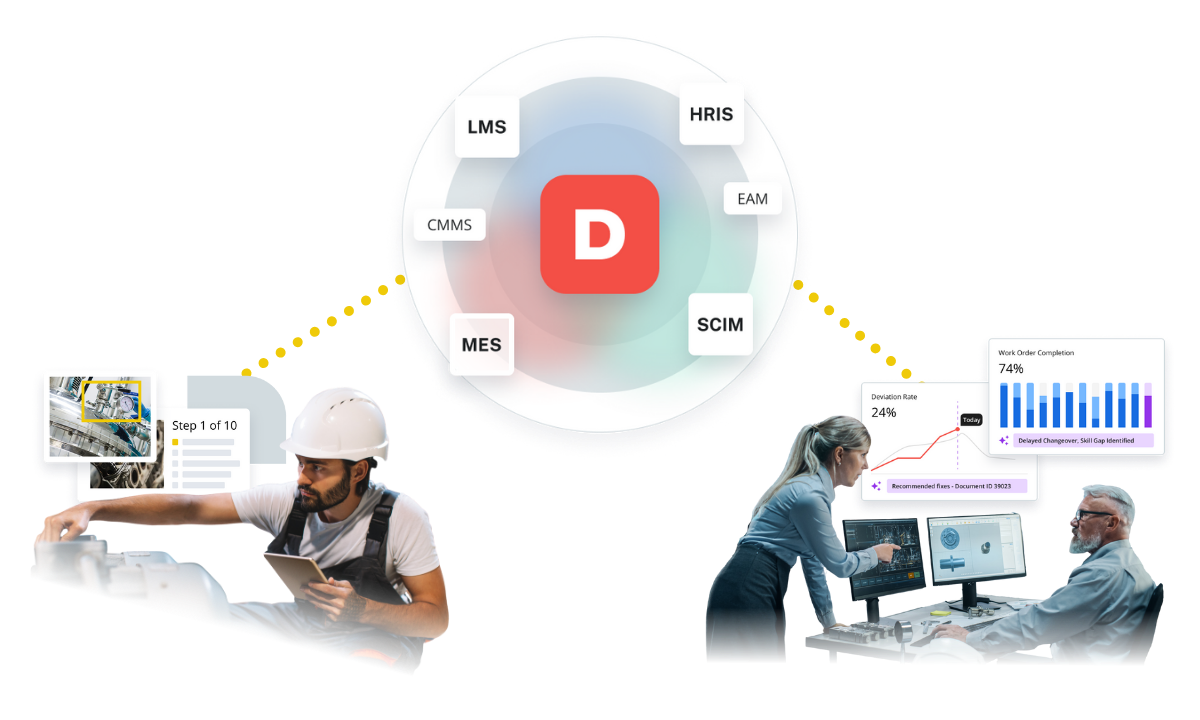
Manufacturing Execution Systems are designed to manage production, track work orders, and monitor performance. They provide visibility into what is happening across the operation. A connected worker platform complements MES by ensuring that the work being tracked is performed consistently and correctly at the task level.
By linking digital work instructions directly to MES workflows, operators can access the exact procedure required for a given job without leaving their workflow. Execution data captured during the task, including completion status, deviations, and quality checks, can be fed back into MES for real time visibility. This creates a tighter feedback loop between planned production and actual execution.
Platforms that enable connected operational workflows tied to production systems allow manufacturers to bridge the gap between system level planning and human level execution.
Learning Management Systems are designed to deliver and track training. They ensure compliance, manage certifications, and provide structured learning experiences. A connected worker platform enhances LMS by linking training directly to the procedures workers perform every day.
Instead of separating training from execution, learning pathways can be built from real operational content. Workers train on the same instructions they will use on the floor, reinforcing retention and applicability. When procedures change, retraining can be triggered automatically, ensuring that LMS records remain aligned with current standards.
This creates a closed loop between learning and doing, where training is continuously validated through execution. Systems built for manufacturing training and workforce development help ensure that skills are not only assigned, but applied in real work environments.
Quality Management Systems are responsible for governance, compliance, and continuous improvement. They define standards, manage documentation, and track quality outcomes. A connected worker platform reinforces QMS by embedding those standards directly into daily workflows.
Digital work instructions ensure that operators follow approved procedures, while embedded quality checks and required sign offs enforce compliance during execution. Every action is recorded, creating a detailed audit trail that supports regulatory requirements and internal quality standards.
Feedback captured from frontline workers can be routed into quality processes, ensuring that continuous improvement efforts are grounded in real operational insight. This strengthens the connection between defined standards and actual performance on the floor.
Organizations focused on improving quality outcomes through standardized execution and feedback loops use connected worker platforms to extend QMS impact into daily operations.
When MES, LMS, and QMS systems are connected to a frontline execution platform, the result is not redundancy.
It is alignment.
MES defines what should be produced and tracks performance. LMS defines how workers are trained and qualified. QMS defines the standards and compliance requirements. A connected worker platform ensures that all of those definitions are carried out consistently in real work.
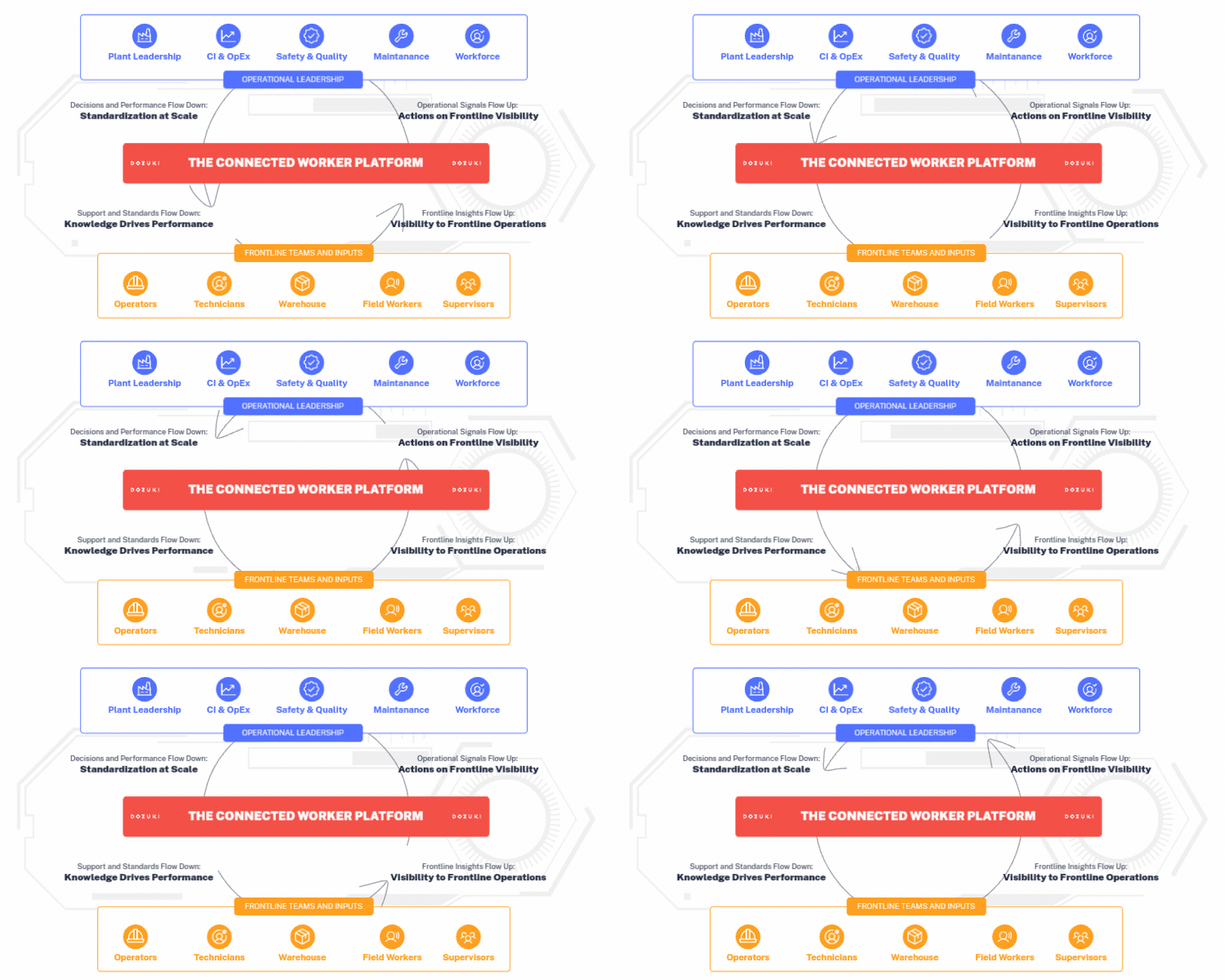
This creates a unified operational layer where knowledge, training, execution, and data flow together. It reduces gaps between systems without requiring organizations to replace the systems they already depend on.
Platforms like Dozuki are designed to integrate across this ecosystem, connecting enterprise systems with frontline activity. By linking knowledge management, training, workflows, and worker collaboration into a single execution layer, manufacturers can ensure that strategy, standards, and training are reflected in every task performed on the floor.
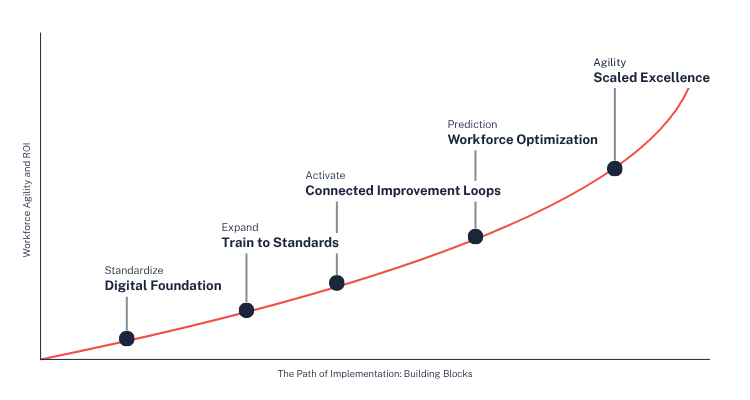
At this stage, the organization transitions from tribal knowledge, paper binders, and scattered files into a controlled digital source of truth for frontline work.
The objective is not broad transformation yet, it is operational stabilization. Leaders focus on digitizing the most critical processes tied to safety, quality, and throughput, while involving operators directly in content creation to build trust and credibility. Worker buy-in is essential here; when frontline teams help create and validate instructions, adoption accelerates and resistance drops. This phase establishes governance, version control, and accountability for standard work.
Leaders should prioritize this stage because it immediately reduces operational variability and creates the foundation for scalable improvement.
Without trusted standard work, training remains inconsistent, continuous improvement stalls, and AI initiatives lack structured data to operate on. ROI at this stage comes from faster onboarding, fewer execution errors, reduced supervisor dependency, and improved audit readiness. Most organizations see early productivity stabilization and measurable reductions in rework, especially in high-variability operations.
Outcome: A controlled, digital source of truth for critical work.
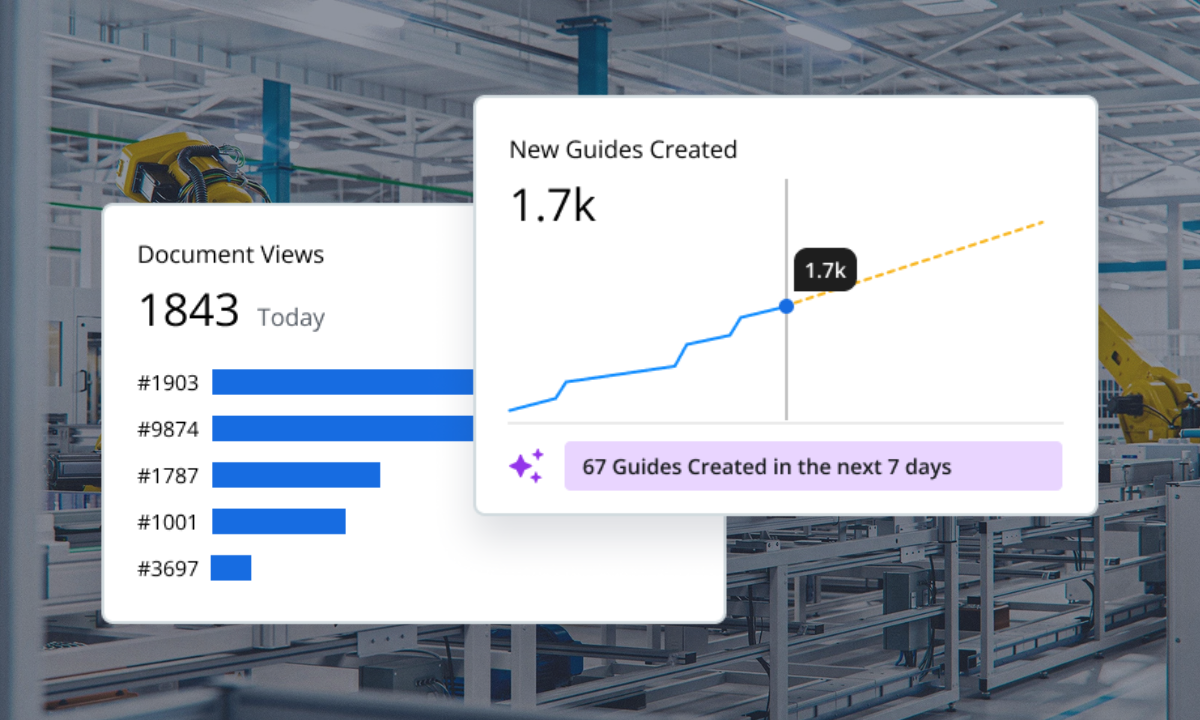
Worker buy-in: Co-create with operators—record short videos, run shop-floor reviews, and make “see a problem, flag it” the norm. Name champions on each shift.
L&D pathways: Convert basic onboarding and safety to role-based micro-modules. Track completions, not just uploads.
AI adoption: Light assist—generate first-draft SOPs from video, auto-transcribe, and suggest step titles/hazards.
Tech/process: Digitize top 20–50 SOPs; e-sign controls; mobile access; revision history; pilot on one line/cell.
ROI signals: 10–20% faster ramp-up on the pilot line, fewer help-me calls, audit readiness improves, 20–40% cut in document maintenance effort.
Exit criteria: 85% pilot usage adherence; frontline says “it’s easier to find and follow the right way.”
Once digital standard work is trusted, the focus shifts to structured learning and workforce capability development. Organizations expand beyond documentation into role-based learning pathways, skills matrices, and certification workflows. Training becomes embedded into daily operations rather than treated as a separate HR function. Supervisors gain visibility into competency levels, cross-training opportunities, and readiness for new production demands. Worker buy-in grows because employees see clearer expectations, faster ramp-up, and defined growth paths.
Leaders focus in this stage to solve one of manufacturing’s most persistent constraints: workforce capability and flexibility.
Standardized training reduces time-to-competency, lowers dependence on tribal knowledge holders, and enables faster scaling of new lines or shifts. AI begins assisting with quiz generation, content summarization, and identifying training gaps. ROI expands into reduced training time, improved changeover performance, and increased labor flexibility, allowing organizations to run more efficiently with the same workforce.
Outcome: Standard work + structured training pathways across departments.
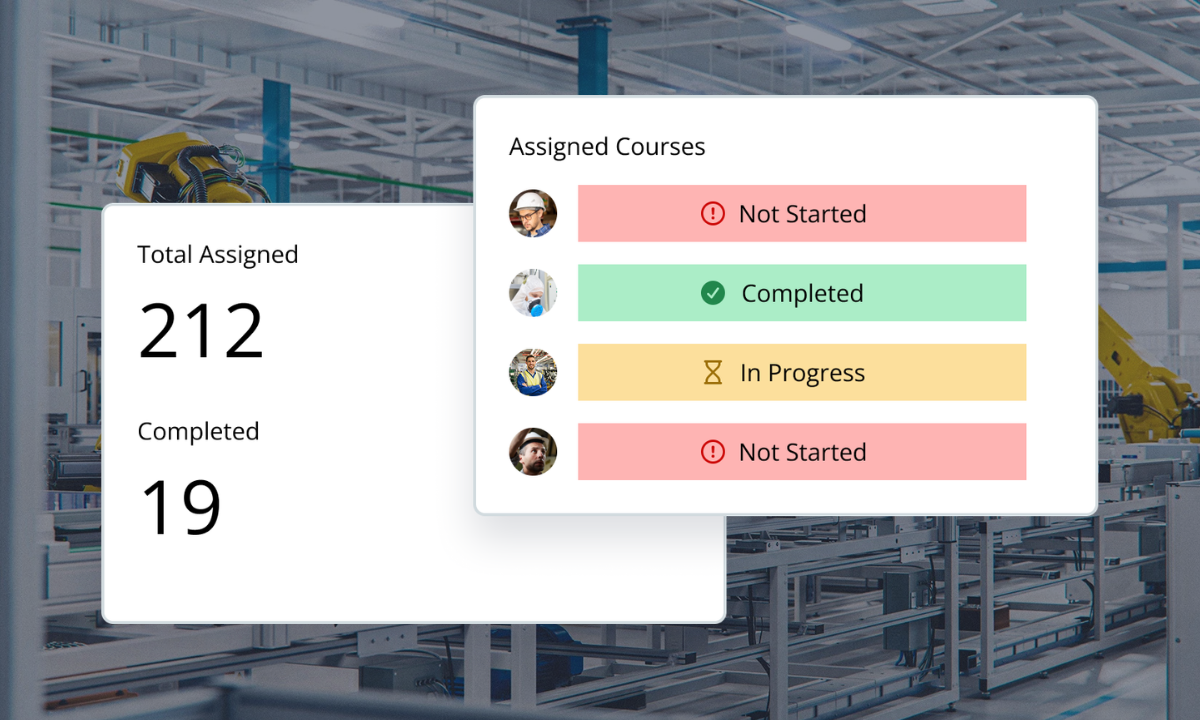
Worker buy-in: Recognize early adopters; supervisors model use in daily Gemba; incorporate operator feedback every release.
L&D pathways: Skills matrix by role; learning paths for onboarding, cross-training, and recertification; quizzes tied to high-risk steps.
AI adoption: Auto-create quizzes/checklists from SOPs; summarize change notes; detect duplicate/obsolete content.
Tech/process: Release workflow (author → reviewer → approver); versioned work instructions; badge/QR access at point of use.
ROI signals: 30–50% cut in time-to-competency (often higher on repetitive work), 10–25% changeover time reduction, near-zero “old doc” defects.
Exit criteria: 70%+ of work hours covered by standard work and training paths; recertification cycles in place.
With standard work and training established, the organization enables a closed-loop improvement model driven by frontline insight. Workers can flag issues, suggest improvements, and capture deviations directly within workflows. This transforms the Connected Worker Platform into a real-time operational intelligence layer. Engineering, quality, and operations teams now receive structured feedback tied to specific steps, processes, and outcomes. Learning pathways evolve dynamically as improvements are validated and deployed.
Leaders should prioritize this stage because it unlocks scalable continuous improvement.
Leaders should prioritize this stage because it unlocks scalable continuous improvement, not dependent on periodic Kaizen events or limited CI teams. Instead, improvement becomes embedded into daily execution. AI begins identifying trends, clustering feedback, and recommending updates to standard work. ROI shifts from stabilization to optimization, including reductions in scrap, improved first-pass yield, faster engineering change cycles, and fewer recurring defects. This stage also strengthens worker engagement, as employees see their input directly improving operations.
Outcome: Continuous improvement loop from the floor to engineering/quality.
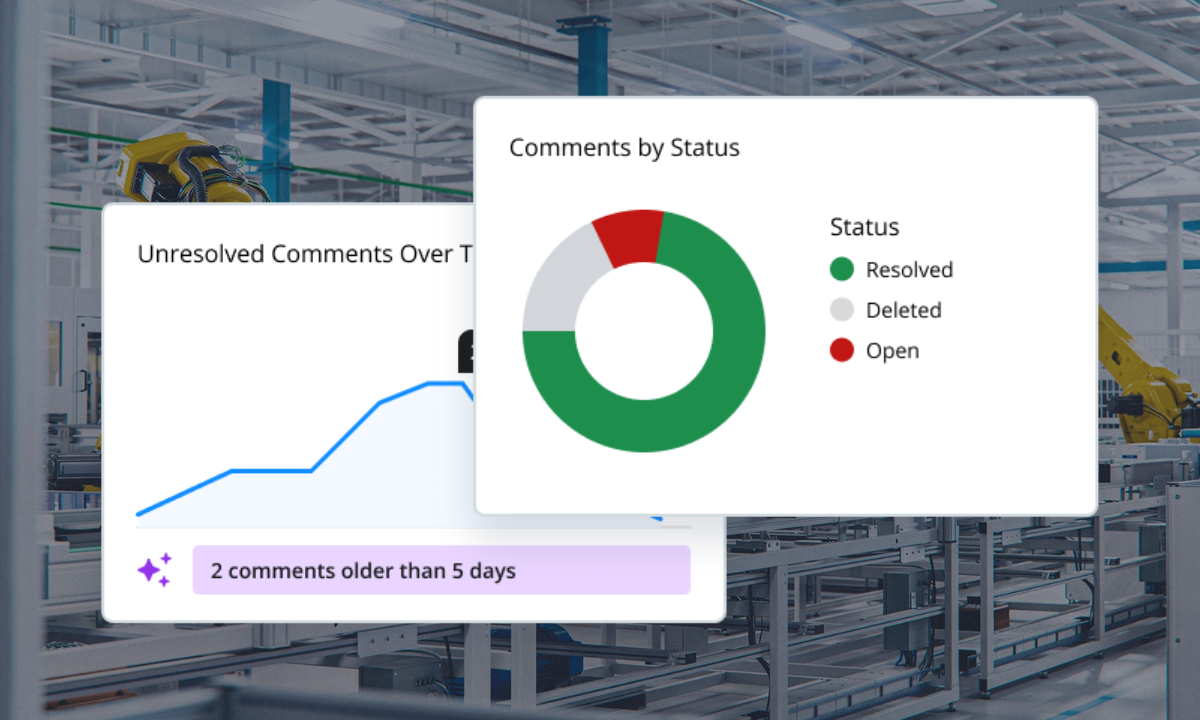
Worker buy-in: Easy, blame-free feedback built into tasks; celebrate improvements that came from operators.
L&D pathways: “Learn while doing”—embed micro-video tips and job aids at the exact step; refresher prompts after low scores or deviations.
AI adoption: Suggest SOP updates based on clustered feedback; auto-summaries of NCR/CAPA learnings pushed into work instructions.
Tech/process: Deviation capture with photos/video; link SOPs ↔ NCR/CAPA; ECN/approval cycle time tracked.
ROI signals: 10–25% scrap/rework reduction, 3–8% first-pass yield lift, 30–50% faster ECN cycles, fewer repeat defects.
Exit criteria: >60% of changes originate from floor feedback; defect themes show declining recurrence.
At this stage, the Connected Worker Platform evolves into a workforce intelligence system. Skills data, training performance, operational outcomes, and quality signals are connected to identify risks and opportunities proactively. Learning pathways become adaptive, automatically recommending refresher training, cross-skilling, or guidance based on performance or process changes. Supervisors and plant leaders gain visibility into workforce readiness and can make staffing decisions based on competency rather than availability alone.
Leaders invest here to unlock operational agility and mitigate workforce risk.
Labor shortages, turnover, and increasing product complexity demand smarter workforce deployment. AI begins predicting training needs, identifying at-risk processes, and recommending targeted interventions. ROI expands into improved throughput, reduced downtime linked to human error, and stronger schedule flexibility. This stage enables plants to run more efficiently with fewer bottlenecks caused by skill gaps.
Outcome: Skills-aware scheduling and targeted upskilling driven by performance signals.
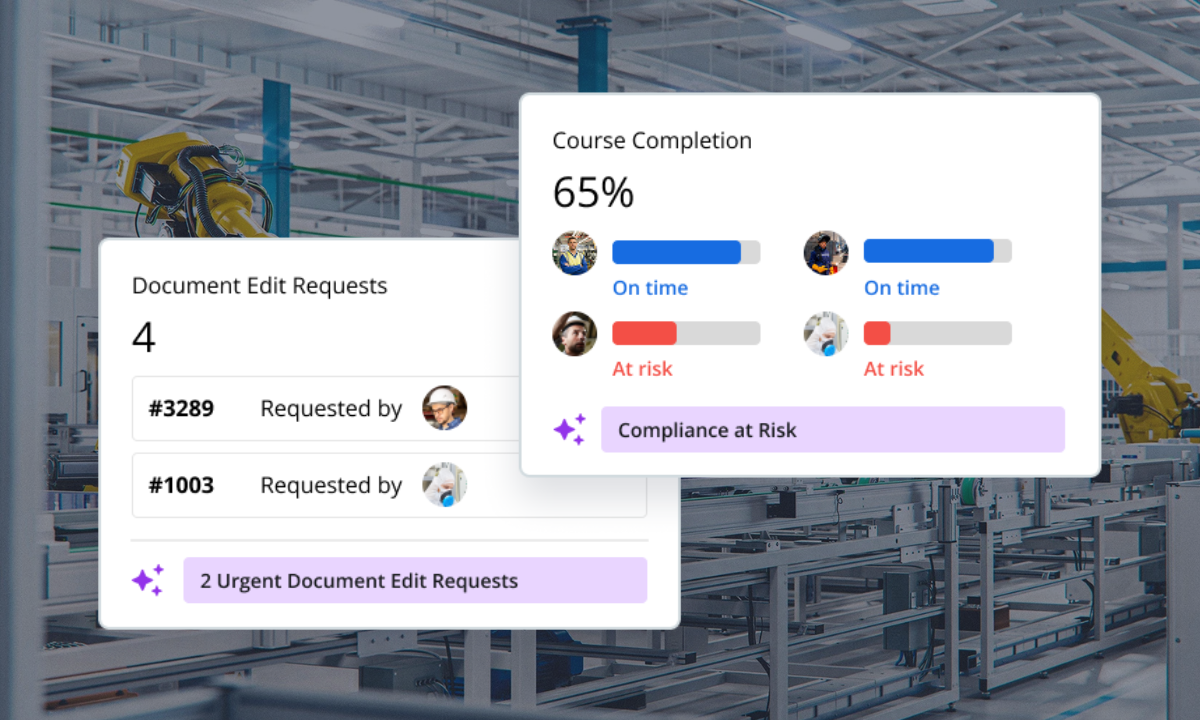
Worker buy-in: Personal growth plans; visible pathways to higher-skill, higher-pay roles; transparent skills matrix.
L&D pathways: Auto-assign refresher training after quality escapes, near-misses, or long gaps since last run.
AI adoption: Assistants and agents suggest “next best training,” flags at-risk processes, and personalizes job aids by variant/skill level.
Tech/process: Integrations to MES/ERP/QMS; tie station and quality data to people/skills data; API-based skill-aware scheduling.
ROI signals: 5–10% throughput gain on constrained lines, 10–20% dip in unplanned downtime tied to human error, measurable coverage flexibility (fewer schedule-risk gaps).
Exit criteria: Training/troubleshooting interventions are triggered automatically by live signals; supervisors use skills data in daily planning.
In the final stage, the organization becomes a self-improving operational system. Knowledge, training, execution, and improvement are continuously connected across sites. Best practices propagate automatically, new product introductions scale faster, and workforce capability evolves dynamically. Workers actively contribute knowledge, learning pathways adapt in real time, and AI continuously refines guidance. The Connected Worker Platform becomes a core operational infrastructure, not just a tool.
Leaders pursue this stage to achieve enterprise-level operational resilience and competitive advantage.
Organizations can scale production, standardize global operations, and accelerate innovation without proportional increases in overhead. ROI becomes strategic: improved OEE, reduced defect rates, faster NPI ramp-up, stronger workforce retention, and safer operations.
At this level, the frontline workforce becomes a measurable, optimizable asset, driving sustained operational excellence across the enterprise.
Outcome: A self-improving system where knowledge, training, quality, and planning continuously reinforce each other across sites.
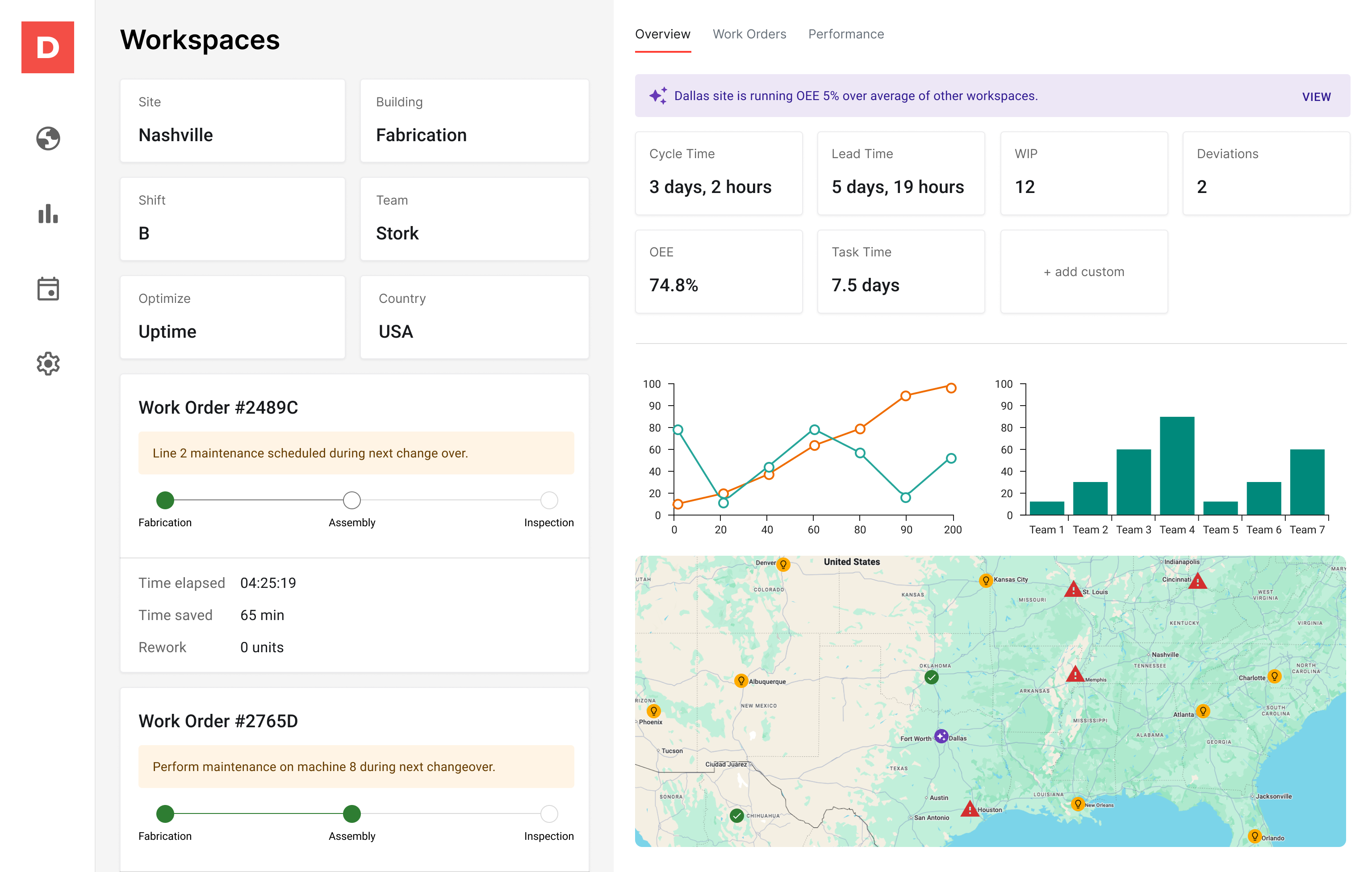
Worker buy-in: Operators own content for their cells; peer-to-peer knowledge creation is rewarded; safety and quality culture is visible.
L&D pathways: Dynamic, role- and variant-specific instructions; cross-site best-practice propagation; multi-site competency governance.
AI adoption: Predictive training and guidance (variant-aware instructions, automatic change propagation, multilingual support, generative visual aids).
Tech/process: Enterprise taxonomy; digital thread from ECN → SOP → training → execution → quality; standardized governance across all plants.
ROI signals: +10–20% OEE in targeted areas, 30–60% PPM reduction, faster NPI/ECN learning curves, retention up (career paths), safer operations.
Exit criteria: Plants share and reuse best practices automatically; KPIs improve without manual heroics.
As manufacturing evolves into the era of Industry 5.0, empowering frontline operators with the right digital tools is no longer optional, it is a strategic necessity. To successfully bridge the gap between human expertise and advanced technology, organizations must partner with a platform designed specifically to capture knowledge and elevate workforce performance.