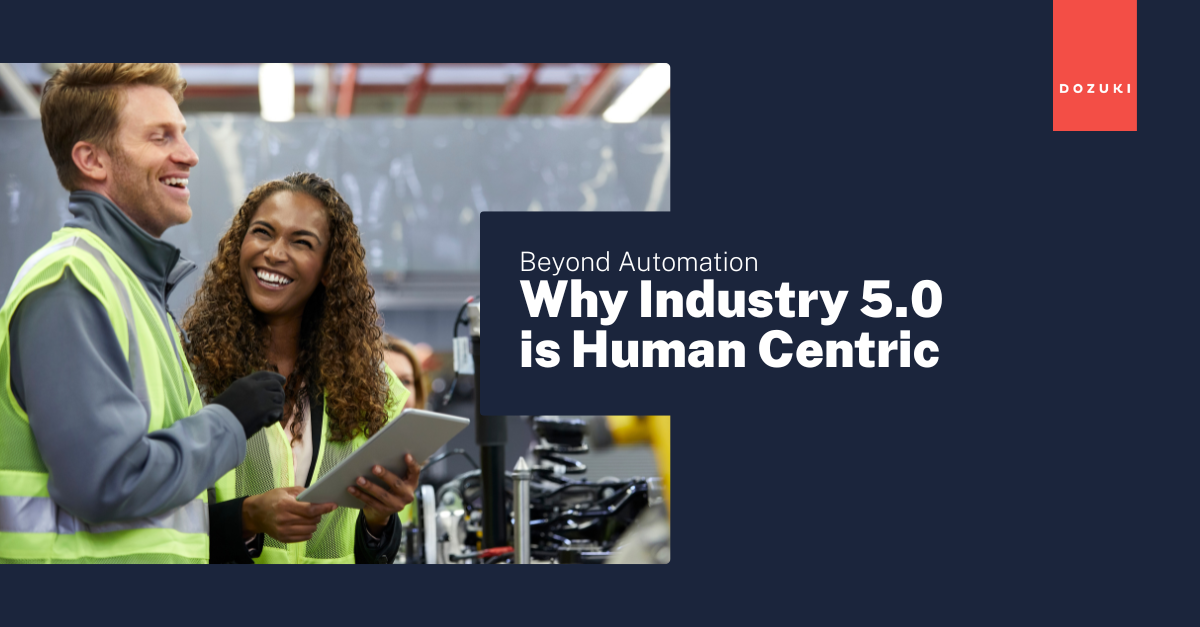
The manufacturing industry is at a turning point. For the last decade, the conversation has been dominated by the era of connectivity and big data.
Factories became "smart," and machines began talking to machines. Yet, while organizations invested millions in connecting their equipment, many realized a critical flaw: their machines were connected, but their workers remained disconnected.
This gap has led to a data-rich but insight-poor frontline. As we move into Industry 5.0, the focus is shifting away from pure automation and toward human-centric intelligence. This new era recognizes that the most flexible and essential element of any factory is not the robot on the line, but the human professional operating it.
The Rise of the Augmented Connected Worker
Analysts at Frost & Sullivan define this shift as the rise of the Augmented Connected Worker. It is a transition from the traditional model—where workers rely on memory or paper binders—to an integrated digital knowledge flywheel.
In an Industry 5.0 environment, a connected worker is empowered with real-time access to digital tools, standardized knowledge, and collaborative systems at the point of work. This is where a connected worker platform becomes the primary infrastructure for modern operations. By leveraging industrial AI, these platforms ensure that technology serves the worker, rather than the worker serving the technology.
Case Study: How To Scaled Industry 5.0 Globally
Even for global customer of Dozuki, the challenge of tribal knowledge and disconnected facilities was a barrier to Industry 5.0. Our industrial manufacturing customer needed a way to ensure that expert knowledge wasn't trapped in individual plants but was accessible to every worker, everywhere.
By implementing Dozuki as their enterprise-wide connected worker platform, they achieved a single pane of glass for their global operations:
- Global Scale: Deployed across 105 facilities worldwide.
- Workforce Empowerment: Over 20,000 users now have instant access to standardized, visual work instructions.
- Resilience: By digitizing the expertise of veteran operators, they built a more agile workforce capable of maintaining high quality regardless of local labor disruptions.
Why Automation Alone Isn’t the Answer
While Industry 3.0 brought computers and robotics to the floor, it often left the human worker isolated. Paper instructions couldn't keep up with shifting technology, leading to tribal knowledge, unwritten rules and shortcuts known only to veteran operators.
When you implement a connected worker platform like Dozuki, you replace fragmented systems with a unified execution layer. This allows your team to:
- Access Interactive Work Instructions: Move beyond static PDFs to dynamic, visual guidance.
- Leverage Manufacturing AI: Use industrial AI to capture expert knowledge and convert it into structured procedures in minutes.
- Scale Global Standards: Ensure that a golden run in one facility is instantly replicable across global operations.
Measurable Operational Impact
Transitioning to a digital frontline layer isn’t just a cultural shift; it is a strategic move to drive manufacturing AI insights and measurable ROI. Organizations that prioritize human-centric connectivity typically see significant improvements across core KPIs:
- 75% Faster Time to Productivity: New hires contribute faster when training is embedded into the work itself.
- 53% Improvement in OEE: Standardized digital work ensures machines run at peak efficiency.
- 50% Reduction in Safety Incidents: Real-time access to safety protocols reduces risk at the point of work.
Building Workforce Agility with Dozuki
The competitive divide between leaders and laggards is widening. Leading manufacturers like General Mills, and Airstream are building a digital execution layer that connects knowledge management, training, and continuous improvement.
Dozuki unifies your people, processes, and data. By using knowledge software that actually understands the manufacturing environment, you empower your frontline to be a proactive engine for quality.
Industry 5.0 is here, and it is human-centric. The question is: is your workforce connected enough to lead it?



.png)